

At a Glance: Key Takeaways
- Peristalsis Mechanics: Large intestine peristalsis relies on coordinated smooth muscle contractions governed by the Enteric Nervous System (ENS), vagal tone, and mucosal serotonin (5-HT) pathways[cite: 6].
- Managing Intraluminal Pressure: High intraluminal pressure causes localized spasms and discomfort; therefore, softening stool bulk and restoring smooth movement lowers luminal resistance[cite: 6].
- Fluid Dynamics & Absorption: Balanced gut transit requires ideal fluid secretion and absorption[cite: 6]. Consequently, compounds like paeoniflorin, psyllium, and dietary polyphenols modulate aquaporins to maintain intestinal hydration[cite: 6].
- Evidence-Based Interventions: Clinical research supports specific botanical extracts (Paeoniflorin, Beetroot leaf, Hawthorn), targeted functional foods (Green Kiwifruit, Prunes, Flaxseed), specific probiotic strains, and vagal nerve stimulation (tVNS) to restore normal motility[cite: 6].
If you are struggling with sluggish bowel movements, understanding how to improve large intestine peristalsis naturally is one of the best ways to restore your digestive rhythm[cite: 6]. When gut transit slows down, your colon suffers from reduced motility, elevated intraluminal pressure, and impaired fluid absorption[cite: 6]. As a result, stool becomes dry, hard, and difficult to pass[cite: 6]. However, learning how to improve large intestine peristalsis naturally helps you address the root causes of slow colonic transit without relying on harsh chemical laxatives[cite: 6].
In this comprehensive guide, we will explore the underlying cellular mechanisms of bowel motility[cite: 6]. Specifically, we will examine how smooth muscle contractions, enteric nervous system signaling, and fluid dynamics work together[cite: 6]. Furthermore, we will review evidence-based natural compounds, functional foods, and neurogenic therapies designed to lower intraluminal pressure and normalize colonic transit[cite: 6].
Understanding Colonic Motility: How to Improve Large Intestine Peristalsis Naturally
The primary role of the colon is to reabsorb water and process metabolic waste[cite: 6]. However, for stool to move smoothly toward elimination, two essential mechanical conditions must occur: regular, rhythmic peristaltic waves and low intraluminal pressure[cite: 6]. Consequently, understanding these physiological factors is key when discovering how to improve large intestine peristalsis naturally[cite: 6].
What Drives Large Intestine Peristalsis?
Peristalsis consists of coordinated wave-like smooth muscle contractions that move waste along the digestive tract[cite: 6]. First, the Enteric Nervous System (ENS)—often called the “second brain”—regulates these contractions in direct communication with the vagus nerve[cite: 6]. In addition, several key biological factors regulate colonic motility[cite: 6]:
- Serotonin (5-HT) Signaling: Enterochromaffin (EC) cells in the gut mucosa release serotonin when triggered by luminal stretch[cite: 6]. As a result, serotonin activates mucosal nerve pathways that initiate peristalsis[cite: 6]. Because the enzyme Tryptophan Hydroxylase 1 (TPH1) synthesizes gut serotonin, supporting this pathway is critical[cite: 6].
- Migrating Motor Complexes (MMCs): Electrophysiological waves sweep residual contents through the digestive tract during fasting periods[cite: 6]. Therefore, adequate fasting between meals supports natural clearing waves[cite: 6].
- Interstitial Cells of Cajal (ICCs): These specialized pacemaker cells generate electrical slow waves[cite: 6]. Consequently, they dictate the rhythm and frequency of smooth muscle contractions[cite: 6].
The Impact of High Intraluminal Pressure on Transit Time
When stool remains stagnant, the colon absorbs excess water, making the stool dense and dry[cite: 6]. Consequently, colonic smooth muscles must exert significantly higher force to push waste forward[cite: 6]. Because of this extra exertion, elevated intraluminal pressure occurs[cite: 6]. Over time, high pressure leads to localized cramping, bloating, visceral pain, and diverticular wall strain[cite: 6].
Therefore, to optimize how to improve large intestine peristalsis naturally, you must address two factors simultaneously[cite: 6]. First, you need to increase stool hydration to reduce friction[cite: 6]. Second, you must regulate smooth muscle contractions so waste moves smoothly without painful spasms[cite: 6].
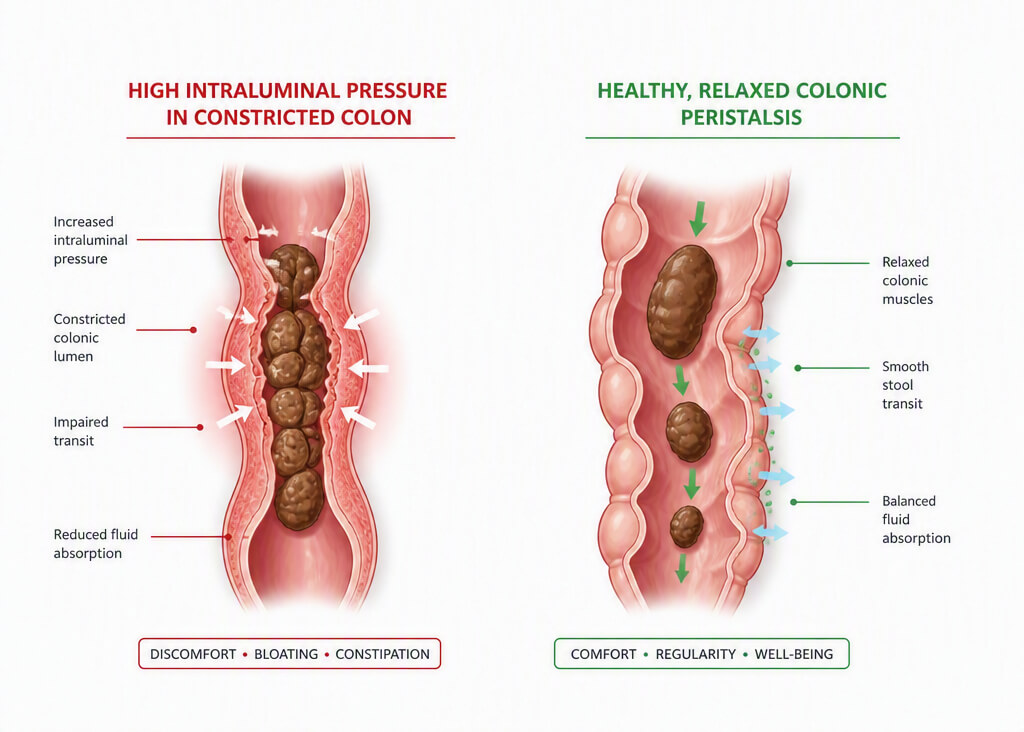

Intestinal Fluid Dynamics and Fluid Absorption Mechanics
The balance between intestinal fluid secretion and absorption directly influences stool consistency and motility speed[cite: 6]. Although the stomach and small intestine handle primary nutrient absorption, the large intestine regulates water retention through specialized membrane proteins called aquaporins (AQPs) and ion transport channels[cite: 6].
“When transit slows down, excessive water absorption occurs, creating hard, dry stool. Consequently, this increases resistance against the colonic wall, raising intraluminal pressure and slowing peristalsis further in a self-reinforcing cycle.”[cite: 6]
To break this cycle, natural health strategies focus on optimizing intestinal fluid metabolism[cite: 6]. For example, specific botanical extracts activate the ASIC3/ERK pathway and reduce mucosal inflammatory signaling[cite: 6]. As a result, these compounds protect the epithelial lining and maintain optimal hydration within the stool[cite: 6].
For more evidence-based protocols on gut health and cellular renewal, explore our latest articles in Health News Articles[cite: 6].
Botanical Compounds: How to Improve Large Intestine Peristalsis Naturally
Recent biomedical research highlights several powerful botanical extracts that directly support colonic transit, enhance serotonin pathways, and lower intraluminal pressure without causing laxative dependency[cite: 6].
1. Paeoniflorin (From Paeonia lactiflora)
Paeoniflorin is an active monoterpene glucoside proven to support slow-transit constipation[cite: 6]. For example, clinical studies demonstrate that paeoniflorin delivers three distinct benefits[cite: 6]:
- First, it modulates the TPH1/AHR pathway, boosting serotonin synthesis to stimulate natural peristaltic waves[cite: 6].
- Second, it suppresses NLRP3/GSDMD-mediated pyroptosis, which protects mucosal tissues from inflammatory injury[cite: 6].
- Third, it activates the ASIC3/ERK pathway, improving colonic fluid balance and reducing visceral hypersensitivity[cite: 6].
2. Beetroot Leaf Extract (Beta vulgaris)
While beetroot root is famous for cardiovascular support, beetroot leaf extract provides direct prokinetic benefits for the digestive system[cite: 6]. Specifically, research shows that beetroot leaf extract reduces oxidative stress in the enteric nervous system[cite: 6]. Consequently, it restores healthy smooth muscle contractions in slow-transit models[cite: 6].
3. Hawthorn Leaf and Fruit Polyphenols (Crataegus spp.)
Hawthorn offers a dual-action benefit for intestinal health[cite: 6]. First, its soluble dietary fiber forms a soft hydrogel that retains moisture in the colon[cite: 6]. As a result, this reduces intraluminal pressure[cite: 6]. Second, hawthorn polyphenols provide antioxidant protection to the colonic mucosa, supporting long-term tissue health[cite: 6].
4. Flavonoids: Naringenin, Luteolin, and Hesperidin
In addition to botanical extracts, dietary flavonoids offer targeted motility support[cite: 6]:
- Naringenin: Found in citrus fruits, naringenin stimulates chloride secretion in the colon[cite: 6]. Consequently, it draws water into the intestinal lumen, softening stool and accelerating transit[cite: 6].
- Luteolin: Furthermore, luteolin reduces mucosal inflammation and normalizes peristaltic rhythms[cite: 6].
- Hesperidin: Finally, hesperidin enhances colonic smooth muscle tone, encouraging consistent transit speed[cite: 6].
Functional Foods and Natural Osmotic Hydrators
Dietary interventions play a fundamental role when learning how to improve large intestine peristalsis naturally[cite: 6]. However, choosing the right type of fiber is crucial[cite: 6]. Specifically, gel-forming, highly hydrated fibers are far more effective at reducing intraluminal pressure than harsh insoluble fibers[cite: 6].
| Functional Food | Primary Mechanism | Impact on Peristalsis & Pressure |
|---|---|---|
| Green Kiwifruit | Actinidin enzyme + high water-holding fiber | Increases stool frequency, reduces discomfort, and lowers luminal pressure[cite: 6]. |
| Psyllium Husk | Gel-forming mucilaginous fiber | 3.4 times more effective than wheat bran for increasing stool hydration and output[cite: 6]. |
| Flaxseeds & Hemp Seeds | Mucilage + essential fatty acid stimulation | Promotes mucosal secretion and lubricates the intestinal wall for effortless passage[cite: 6]. |
| Prunes & Prune Juice | Sorbitol + chlorogenic acid + soluble fiber | Draws water osmotically into the colon, encouraging natural motor activity[cite: 6]. |
To explore targeted professional-grade formulas that support gut motility, visit our Natural Health Shop and browse our Gut & Microbiome solutions[cite: 6].
Neurogenic and Microbiome Strategies: How to Improve Large Intestine Peristalsis Naturally
Because peristalsis is driven by neural networks, supporting vagal tone and balancing gut bacteria are key strategies when discovering how to improve large intestine peristalsis naturally[cite: 6].
Vagus Nerve Stimulation (taVNS)
The vagus nerve delivers essential parasympathetic signals to the gastrointestinal tract[cite: 6]. However, when vagal tone is low, digestive motility slows, enzymatic secretions decrease, and intraluminal pressure rises[cite: 6]. Consequently, Transcutaneous Auricular Vagal Nerve Stimulation (taVNS) has been shown in clinical trials to improve bowel frequency, reduce abdominal pain, and restore healthy gut-brain signaling[cite: 6].
Probiotic Strains That Support Motility
Although many probiotics exist, not all strains influence bowel transit speed[cite: 6]. However, specific targeted strains have shown clear benefits in clinical research[cite: 6]:
- Bifidobacterium animalis subsp. lactis (BPL1®, BL-99, BB-12): Improves mucosal barrier function, reduces overall transit time, and regulates short-chain fatty acid (SCFA) production[cite: 6].
- Bifidobacterium longum (S3 strain): Rebalances colonic dysbiosis, lowers pro-inflammatory cytokines (TNF-alpha, IL-1beta), and supports gut mucosal integrity[cite: 6].
- Lactobacillus reuteri (DSM 17938): Increases bowel movement frequency and modulates enteric neuron activity[cite: 6].
Acupressure and Abdominal Massage
In addition to probiotics, physical and somatosensory therapies offer direct mechanical and reflex support for intestinal motility[cite: 6]:
- Auricular Acupressure: For example, studies show that stimulating specific ear reflex points improves bowel movement frequency by activating autonomic gut reflexes[cite: 6].
- Abdominal Meridian Massage: Similarly, massaging the abdomen in a clockwise direction along the colon path using warm olive oil physically reduces trapped gas, encourages forward propulsion, and lowers intraluminal pressure[cite: 6].
Daily Action Protocol: How to Improve Large Intestine Peristalsis Naturally
To help you implement these research-backed strategies into your routine, here is a practical daily protocol[cite: 6]:
- First, Morning Hydration & Gel Fiber: Drink 16 oz of warm water with 1 tablespoon of ground flaxseed or psyllium husk, alongside 2 fresh green kiwifruits[cite: 6].
- Second, Prokinetic Botanical Support: Take high-integrity plant extracts containing paeoniflorin, hawthorn, or beetroot leaf to encourage natural serotonin synthesis and peristalsis[cite: 6].
- Third, Parasympathetic Vagal Activation: Practice 10 minutes of deep diaphragmatic breathing or gentle walking after meals to stimulate vagal activity and digestive motility[cite: 6].
- Finally, Evening Abdominal Care: Perform a gentle 5-minute clockwise abdominal massage with warm carrier oil before bed to release intraluminal pressure and promote overnight transit[cite: 6].
Scientific References & Outbound Research Sources
Below are key high-integrity research citations and outbound academic sources supporting these natural motility strategies:
- Qiu J, et al. (2026). Paeoniflorin alleviates CKD-associated constipation by modulating TPH1/AHR-related signaling and suppressing NLRP3/GSDMD-mediated pyroptosis. PubMed Database (NCBI)[cite: 6].
- Saleh AO, et al. (2026). Vagal nerve stimulation for chronic constipation: A systematic meta-analysis. PubMed Central (PMC Open Access)[cite: 6].
- Rodenes-Gavidia A, et al. (2026). Bifidobacterium animalis subsp. lactis BPL1® exhibits potential as a functional probiotic for relieving constipation. Google Scholar Academic Search[cite: 6].
- Gearry R, et al. (2023). Consumption of 2 green kiwifruits daily improves constipation and abdominal comfort: A multinational randomized controlled trial. PubMed Index #37021837[cite: 6].
- Deng Y, et al. (2024). Activation of ASIC3/ERK pathway by paeoniflorin improves intestinal fluid metabolism and visceral sensitivity. GreenMedInfo Natural Medicine Database[cite: 6].
- Ayari A, et al. (2025). Beetroot leaf extract enhances gut motility in a model of loperamide-induced constipation. NCBI PubMed Journal Research[cite: 6].
- McRorie JW, et al. (2020). Nonfermented gel-forming psyllium vs insoluble wheat bran for increasing stool output. PMC Medical Literature[cite: 6].