

At a Glance: Key Research Findings
- Biofilm Eradication: High MGO levels penetrate MRSA and Pseudomonas biofilms directly[cite: 8, 10].
- Venous Ulcer Recovery: Clinical trials show rapid closure in chronic non-healing leg wounds[cite: 8, 10].
- Sinus Health: Nasal douching reduces chronic rhinosinusitis and post-surgical inflammation[cite: 8, 10].
- Skin Barrier Repair: Topical manuka creams suppress inflammatory cytokines in severe eczema[cite: 8, 10].
- Oncology Support: Emerging studies demonstrate inhibition of colon and breast cancer stem cells[cite: 8, 10].
Modern medicine faces a growing challenge from antibiotic-resistant superbugs[cite: 8, 10]. Fortunately, manuka honey wound healing research demonstrates remarkable clinical results against drug-resistant bacteria[cite: 8, 10]. Unlike standard honey, manuka honey contains high levels of bioactive Methylglyoxal (MGO)[cite: 8, 10]. Therefore, manuka honey wound healing protocols offer a powerful natural solution for severe infections[cite: 8, 10].
Clinical trials highlight how manuka honey wound healing speeds up tissue regeneration[cite: 8, 10]. For example, manuka honey destroys recalcitrant bacterial biofilms and clears venous leg ulcers[cite: 8, 10]. Additionally, it relieves chronic rhinosinusitis and calms inflammatory skin conditions[cite: 8, 10]. Consequently, understanding manuka honey wound healing helps patients manage difficult wounds naturally. For targeted natural solutions, check our Natural Health Supplement Dispensary.
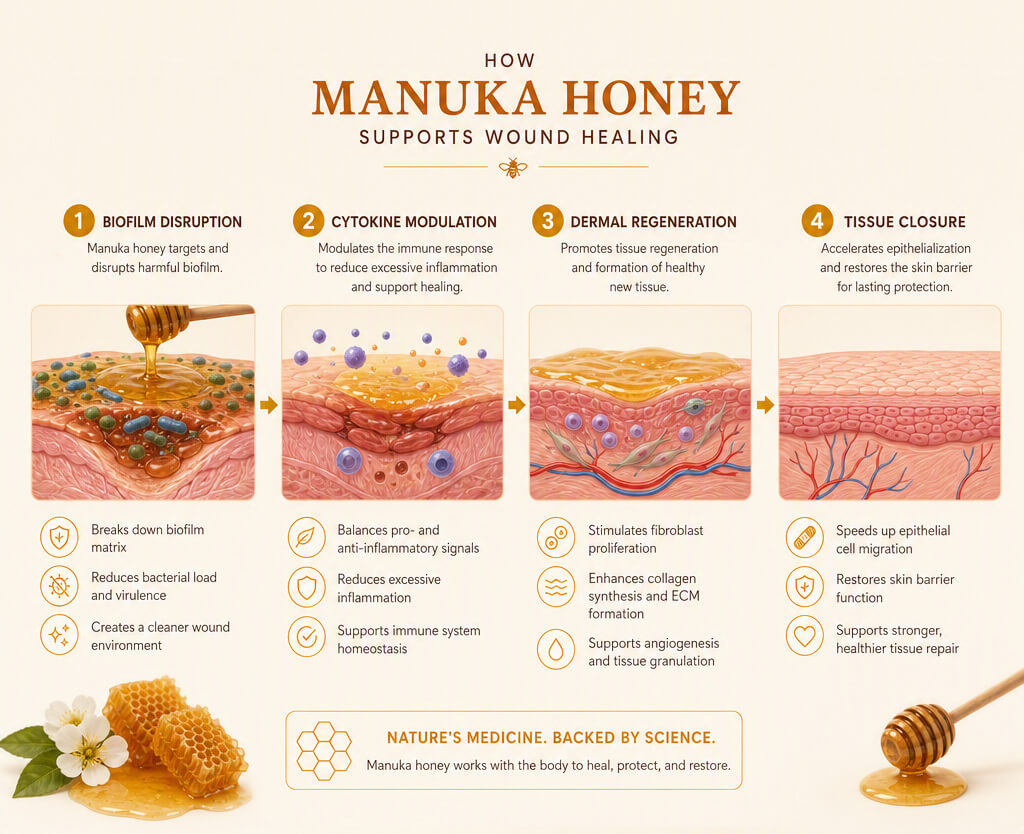

1. The Science Behind Manuka Honey Wound Healing
Manuka honey comes from the nectar of Leptospermum scoparium bushes in New Zealand and Australia[cite: 8, 10]. Specifically, its unique bioactivity stems from non-peroxide Methylglyoxal (MGO) pathways[cite: 8, 10].
Key Research Insight: High MGO levels bypass standard bacterial resistance mechanisms[cite: 8, 10]. In fact, studies show manuka honey wound healing protocols destroy MRSA and Pseudomonas aeruginosa biofilms[cite: 8, 10]. Furthermore, bacteria do not develop resistance to manuka honey over time[cite: 8, 10].
2. Accelerating Recovery in Chronic Venous Leg Ulcers
Chronic leg ulcers often fail to heal due to impaired blood circulation[cite: 8, 10]. However, manuka honey wound healing dressings restore tissue growth rapidly[cite: 8, 10].
In randomized controlled trials, topical manuka honey reduced wound size significantly[cite: 8, 10]. Specifically, it eliminated foul odors and lowered localized pain[cite: 8, 10]. Moreover, manuka honey stimulates regulatory T-cell expansion to control tissue swelling[cite: 8, 10]. As a result, non-healing venous ulcers achieve complete closure faster[cite: 8, 10].
Clinical Potency & UMF Grade Selection Guide
| UMF Grade | MGO Rating | Primary Clinical Target |
|---|---|---|
| UMF 5+ to 9+ | MGO 83+ to 262+ | General Immunity & Daily Digestive Support |
| UMF 10+ to 14+ | MGO 263+ to 513+ | Minor Wounds, Oral Hygiene & GERD Relief |
| UMF 15+ to 19+ | MGO 514+ to 828+ | Chronic Ulcers, Biofilm Eradication & Severe Burns |
| UMF 20+ | MGO 829+ | Advanced Hospital-Grade Wound Protocols |
3. Biofilm Eradication in Chronic Rhinosinusitis
Sinus infections often persist due to dense bacterial biofilms lining nasal passages[cite: 8, 10]. Fortunately, manuka honey wound healing applications extend to upper respiratory tissues[cite: 8, 10].
Clinical studies show that manuka honey nasal douching reduces sinus inflammation[cite: 8, 10]. For instance, post-sinus surgery patients experienced faster mucosal recovery with manuka honey rinses[cite: 8, 10]. In addition, manuka honey microbubbles effectively penetrate deep biofilm structures[cite: 8, 10].
4. Advanced Skin Repair and Atopic Dermatitis
Inflammatory skin conditions cause severe redness, scaling, and skin barrier breakdown[cite: 8, 10]. However, manuka honey wound healing therapy rebuilds damaged dermal layers[cite: 8, 10].
Topical manuka creams suppress inflammatory cytokines and restore skin hydration[cite: 8, 10]. Furthermore, manuka honey speeds up healing in severe porcine burn models[cite: 8, 10]. Consequently, integrative dermatologists recommend manuka honey for eczema and severe burns[cite: 8, 10]. You can explore related health reports in our Natural Health News Repository.
5. Integrative Cancer Support and Gastrointestinal Protection
Recent oncology research reveals exciting new therapeutic potential for manuka honey[cite: 8, 10]. Specifically, oral administration modulates gut microbiota and induces anti-tumor resistance[cite: 8, 10].
In preclinical models, manuka honey inhibited breast cancer progression and colon cancer stem cells[cite: 8, 10]. Additionally, manuka honey protects esophageal tissues in patients with GERD[cite: 8, 10]. Therefore, manuka honey provides versatile support across multiple health conditions[cite: 8, 10].
Practical Protocol: Implementing Manuka Honey Wound Healing
- Check MGO / UMF Ratings: Select medical-grade products with a UMF rating of 10+ or MGO 263+ for clinical activity[cite: 8, 10].
- Topical Application: Apply medical-grade manuka honey directly to sterile dressings before covering non-healing wounds[cite: 8, 10].
- Internal Support: Consume 1 teaspoon daily on an empty stomach for esophageal and gastrointestinal relief[cite: 8, 10].
Stay Updated on Cutting-Edge Natural Research
Join our community of over 10,000 health seekers. Receive clinical research updates, natural remedies, and wellness strategies delivered weekly.
Subscribe to Newsletters
Selected Clinical References & Outbound Resources
- Pseudomonas Biofilm Inhibition: Journal of Microbiological Methods. PubMed PMID: 39863836[cite: 8, 10].
- Topical Treatment of Venous Leg Ulcers: Pharmaceuticals (Basel). PubMed PMID: 39989885[cite: 8, 10].
- Chronic Rhinosinusitis Meta-Analysis: Journal of Rhinology. PubMed PMID: 39893322[cite: 8, 10].
- Preclinical Breast Cancer Inhibition: Nutrients. PubMed PMID: 39203875[cite: 8, 10].