

🔬 Article at a Glance: Key Research Findings
- Cancer Cell Cycle Arrest & Apoptosis: Natural polyphenols such as curcumin, baicalein, and quercetin halt uncontrolled tumor cell division at key G1/S and G2/M checkpoints while triggering programmed cell death (apoptosis).
- High-Dose Micronutrient Signaling: Concentrated Vitamin C selectively induces apoptotic signaling in gastric cancer cells, while Vitamin K2 activates cell death pathways in bladder cancer models.
- Metabolic Chemosensitization: Fasting and caloric restriction enhance immune surveillance and chemosensitization, allowing therapies to target malignant tissue while sparing healthy cells.
- Organ Protection during Therapy: Virgin coconut oil demonstrates significant hepatoprotective action, mitigating acute liver toxicity from chemotherapeutic agents like methotrexate.
- Prostate Health Doubling Time: Pomegranate extract (POMx) extends PSA doubling time by over six months in clinical human trials.
Uncontrolled cellular proliferation is the hallmark signature of oncogenesis. Unlike healthy somatic cells, which adhere to strict genetic checkpoints governing growth, repair, and cell death, malignant cells bypass these regulatory guardrails to divide indefinitely. Therefore, to effectively halt tumor progression, integrative oncology focuses on a pivotal biological switch: cancer cell cycle arrest paired with selective apoptosis.
Emerging research highlights how targeted bio-compounds, selective nutritional protocols, and metabolic therapies restore cellular signaling. Consequently, these natural interventions induce cancer cell cycle arrest and sensitize malignant cells to targeted therapies while protecting normal organ tissue. Below, we explore the peer-reviewed science behind cell cycle signaling and how targeted natural therapies alter the cellular landscape.
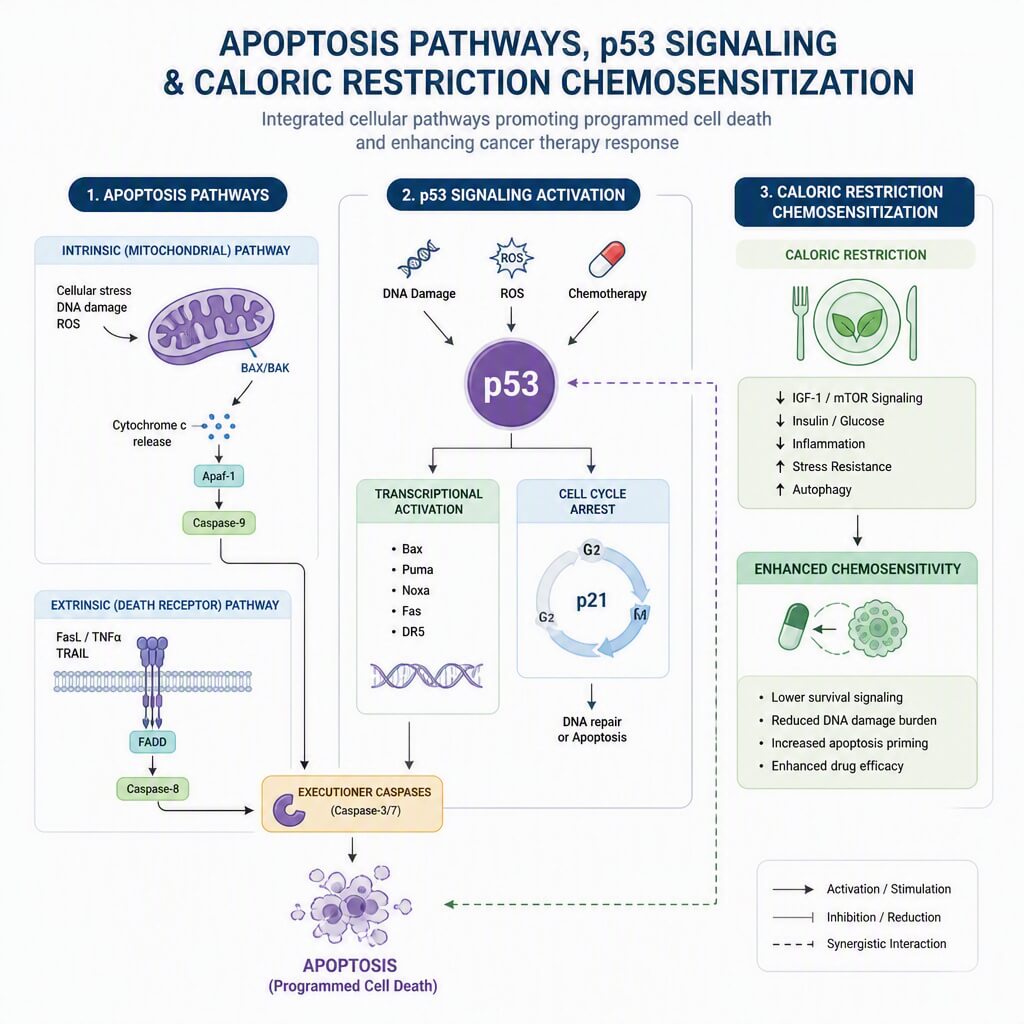

1. Understanding Cancer Cell Cycle Arrest & Apoptosis in Malignant Cells
The eukaryotic cell cycle progresses through distinct phases: G1 (gap 1), S (DNA synthesis), G2 (gap 2), and M (mitosis). Specifically, cyclin-dependent kinases (CDKs) act as the molecular engines driving cells through these transitions. In cancerous mutations, CDK overdrive accelerates cell division, while tumor suppressor genes (like p53) are silenced.
For instance, inducing cancer cell cycle arrest forces malignant cells into a suspended growth state, blocking DNA replication and preventing mitotic division. Once halted, the cell is frequently directed toward apoptosis—the body’s natural program for clearing damaged or dangerous cells.
Natural compounds downregulate cyclin-dependent kinases (CDK2, CDK4, CDK6) and upregulate p21 and p27 expression, forcing malignant cells into cancer cell cycle arrest at the G1/S or G2/M checkpoints.
2. Top Natural Compounds That Induce Cancer Cell Cycle Arrest
Extensive natural medicine databases rank plant-derived bioactives based on their Cumulative Knowledge (CK) scores and confirmed Action Counts (AC) for inducing cancer cell cycle arrest. Key therapeutic agents include several key compounds summarized below:
| Substance / Flavonoid | Action Count (AC) | Cumulative Knowledge (CK) | Primary Targeted Pathways |
|---|---|---|---|
| Curcumin | 130 | 153 | G2/M Arrest, NF-κB Inhibition, Caspase-3/9 Activation |
| Baicalein | 10 | 14 | G1/S & G2/M Cell Cycle Arrest, Apoptosis Induction |
| Quercetin | 29 | 30 | COX-2 & NF-κB Inhibition, Free Radical Scavenging |
| Sulforaphane | 35 | 43 | Epigenetic HDAC Inhibition, Phase II Enzyme Activation |
| EGCG (Green Tea Extract) | 12 | 13 | Metabolic Disruption, Receptor Tyrosine Kinase Inhibition |
Baicalein: Dual Apoptotic & Cell Cycle Arrest Action
Baicalein, a key flavone extracted from Scutellaria baicalensis (Skullcap), exhibits potent antiproliferative properties across diverse cancer types. Furthermore, systematic reviews confirm that baicalein downregulates cyclin D1 and expression of CDK4/6, effectively catching tumor cells before DNA replication occurs while triggering intrinsic apoptotic cascades.
Quercetin: Inflammatory Pathway Modulation
Similarly, quercetin targets master inflammatory switches in tumor microenvironments. By acting as a direct cyclooxygenase-2 (COX-2) inhibitor and suppressing NF-kappaB (NF-κB) nuclear translocation, quercetin neutralizes key survival signals required for persistent cancer cell proliferation.
3. Targeted Micronutrients & Botanical Extracts in Research
“High-dose intravenous and targeted nutritional interventions offer unique metabolic pressures against cancer cells, utilizing pro-oxidant, targeted enzymatic, and apoptotic mechanisms while leaving normal physiology uncompromised.”
High-Dose Vitamin C: Selective Apoptosis in Gastric Cancer
While low-dose Vitamin C functions as an antioxidant in healthy tissues, high physiological concentrations generate localized hydrogen peroxide accumulation in tumor environments. As a result, in vitro evidence shows that high-dose Vitamin C induces mitochondrial membrane depolarisation, leading to rapid cancer cell cycle arrest and selective apoptosis in gastric cancer cell lines.
Vitamin K2: Programmed Death in Bladder Cancer
Additionally, Vitamin K2 (menaquinone) extends beyond calcium transport and vascular health. Laboratory investigations demonstrate that Vitamin K2 triggers intrinsic apoptotic cascades in bladder cancer cells through oxidative stress modulation and suppression of anti-apoptotic protein expression.
Pomegranate Extract (POMx) & Prostate Cancer Doubling Time
In clinical human trial data, targeted supplementation with polyphenol-rich Pomegranate Extract (POMx) delivered significant therapeutic impact. Specifically, patients receiving POMx experienced an increase in PSA (Prostate-Specific Antigen) doubling time of over 6 months, demonstrating a measurable slowing of tumor progression rate.
Pine Bark Extract (Pinus eldarica) Cytotoxicity
Furthermore, extracts from Pinus eldarica demonstrate notable cytotoxic activity against breast and cervical cancer models, highlighting the growing significance of specialized pine bark polyphenol complexes as potential natural candidates in integrative oncology.
4. Metabolic Interventions: Fasting Chemosensitization & Organ Protection
Fasting & Caloric Restriction: Chemosensitization via Immune Surveillance
Short-term fasting or caloric restriction protocols create a distinct biological phenomenon termed differential stress resistance. Specifically, healthy host cells shift energy resources toward maintenance and DNA repair, whereas mutated tumor cells—dependent on high-glucose glycolysis—become vulnerable.
⚡ Clinical Insight: Immune Surveillance
Research published in Frontiers in Oncology highlights that chemo-sensitization resulting from short-term fasting is mediated by enhanced immune surveillance. Fasting depletes circulating IGF-1 and glucose levels, boosting T-cell cell-killing activity against malignant cells while mitigating treatment side effects.
Virgin Coconut Oil: Mitigating Chemotherapy Hepatotoxicity
A central challenge in conventional cancer treatments is cumulative organ toxicity. However, animal model studies reveal that supplementation with Virgin Coconut Oil (VCO) significantly attenuates acute liver injury induced by the chemotherapeutic drug methotrexate. In fact, VCO exerts its hepatoprotective effects by suppressing lipid peroxidation, restoring hepatic antioxidant capacity, and quenching reactive oxygen species (ROS).
Dietary Carcinogen Reduction: Processed Red Meat Risks
Additionally, nutritional oncology requires eliminating powerful tumor-promoting compounds. Consequently, systematic meta-analyses link high consumption of processed red meat to an elevated risk of both bladder cancer and colorectal cancer. Carcinogenic compounds formed during high-heat processing—such as heterocyclic amines (HCAs), polycyclic aromatic hydrocarbons (PAHs), and N-nitroso compounds (NOCs)—damage gut and urinary tract epithelial tissue.
5. Practical Applications & Comprehensive Health Protocols
Building an evidence-based metabolic and cellular wellness framework requires aligning strategic dietary changes with targeted lifestyle habits. Therefore, key steps include:
- Implement Periodic Caloric Restriction: Incorporate physician-guided fasting or fasting-mimicking protocols to optimize autophagy and enhance cellular defense mechanisms. Read our deep-dive analysis on our Dr. Stacy Health News Hub for detailed metabolic guidelines.
- Integrate Standardized Polyphenols: Utilize concentrated curcumin, baicalein, green tea polyphenols, and quercetin to support optimal kinase regulation and inflammatory balance.
- Optimize Cellular Longevity & Supplementation: Explore professional-grade solutions in our curated Dr. Stacy Wellness Shop, featuring Metabolic & Cellular Supplements and Cellular Longevity Formulations.
- Eliminate Carcinogenic Exposures: Transition away from processed meats and industrial food additives while promoting liver detox pathways through clean living essentials.
📚 Peer-Reviewed Scientific References & Evidence
- Processed Meat & Bladder Cancer Risk: Eur J Nutr. 2016 Dec 22. PMID: 28070638. Meta-analysis detailing processed meat risks in bladder carcinogenesis.
- Chemo Brain Persistence: J Clin Oncol. 2016 Dec 28. PMID: 28029304. Prospective evaluation of cognitive alterations post-chemotherapy.
- Pomegranate (POMx) & Prostate Doubling Time: J Clin Oncol. 2011 May 20;29(15_suppl):4522. PMID: 28023432. Clinical evidence on POMx increasing PSA doubling time over 6 months.
- Virgin Coconut Oil Hepatoprotection: Biomed Pharmacother. 2017 Jan 6;87:437-442. PMID: 28068634. Protection against methotrexate-induced acute hepatotoxicity via antioxidant pathways.
- Baicalein Apoptosis & Cell Cycle Arrest: Med Chem Res. 2016 Aug;25(8):1515-1523. PMID: 28008217. Mechanistic review of baicalein antiproliferative activity.
- Fasting & Chemosensitization: Front Oncol. 2016;6:242. PMID: 27896219. Enhanced immune surveillance resulting from short-term caloric restriction.
- Pinus Eldarica Cytotoxicity: Res Pharm Sci. 2016 Dec;11(6):476-483. PMID: 28003841. In vitro cytotoxicity of pine bark extract in cancer cell lines.
- Processed Red Meat Carcinogens: J Gastroenterol. 2016 Dec 2. PMID: 27913919. Analysis of carcinogenic mechanisms in colorectal cancer progression.
- Quercetin NF-κB & COX-2 Suppression: Nutr Cancer. 2012 Mar 27. PMID: 22452660. Antioxidant and anti-carcinogenic properties of bioflavonoid quercetin.
- High-Dose Vitamin C Gastric Cancer Apoptosis: Oncol Lett. 2016 Nov;12(5):4270-4276. PMID: 27895802. High-dose ascorbic acid induction of cell death in gastric carcinoma.
- Vitamin K2 Bladder Cancer Apoptosis: PLoS One. 2016;11(8):e0161886. PMID: 27570977. Menaquinone-induced apoptotic pathways in human bladder cancer cells.